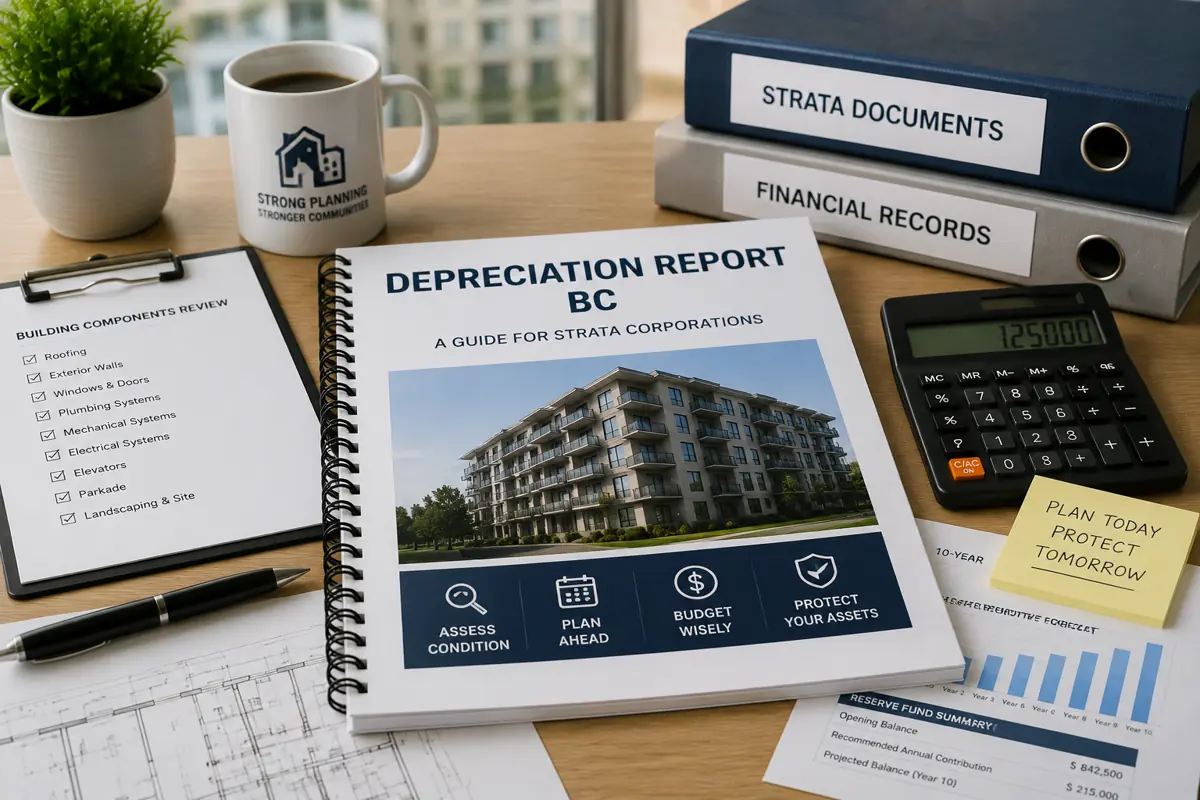
Learn what a depreciation report is in British Columbia, why strata corporations need one, what it includes, how much it costs, and how it helps boards plan future repairs and reserve fund requirements.
Depreciation Report BC: Complete Guide for Strata Corporations (2026)
A depreciation report is one of the most important planning tools for a British Columbia strata corporation.
It helps strata councils understand the condition of major building components, estimate future repair costs, and plan how much money should be set aside for upcoming maintenance.
Without proper long-term planning, strata corporations may face unexpected repairs, increased strata fees, or large special assessments.
A depreciation report helps answer important questions:
- What building components will need replacement?
- When will major repairs likely be required?
- How much will those repairs cost?
- Is the contingency reserve fund sufficient?
What Is a Depreciation Report in BC?
A depreciation report is a professional assessment of a strata corporation’s physical assets and future repair requirements.
The report examines major components of the property and estimates:
- Current condition
- Expected remaining lifespan
- Future replacement costs
- Recommended maintenance timelines
- Reserve fund requirements
The purpose is to help strata councils make informed decisions about long-term building maintenance.
Why Are Depreciation Reports Important for BC Strata Corporations?
Strata buildings require continuous maintenance.
Major components eventually need repair or replacement, including:
- Roof systems
- Building envelope
- Windows
- Plumbing systems
- Electrical systems
- Heating and cooling systems
- Elevators
- Parking structures
A depreciation report allows the strata corporation to plan for these expenses before they become urgent.
Benefits include:
- Better financial planning
- Reduced risk of unexpected costs
- More accurate contingency reserve fund planning
- Improved transparency for owners
- Better long-term asset management
What Does a BC Depreciation Report Include?
A professional depreciation report typically includes several important sections.
1. Building Component Assessment
The consultant reviews major physical components of the property.
This may include:
- Exterior systems
- Roofing
- Mechanical systems
- Electrical systems
- Plumbing
- Common amenities
- Parking facilities
The goal is to determine the current condition and expected remaining useful life of each component.
2. Repair and Replacement Forecast
The report estimates when major repairs may be required.
Examples include:
- Roof replacement timelines
- Elevator modernization
- Exterior repairs
- Plumbing upgrades
- Mechanical equipment replacement
This allows the strata council to prepare financially before major costs occur.
3. Cost Estimates
A depreciation report provides estimated future costs for repair and replacement projects.
Costs may depend on:
- Building size
- Age of the property
- Current condition
- Construction materials
- Market conditions
These estimates help the strata corporation plan appropriate reserve fund contributions.
Is a Depreciation Report Required in BC?
Depreciation report requirements in British Columbia have changed over time through updates to strata legislation.
Strata corporations should review current requirements under the Strata Property Act and related regulations.
Requirements may depend on factors such as:
- Corporation type
- Applicable exemptions
- Legislative updates
- Council decisions
Because requirements can change, strata councils should confirm their current obligations.
How Much Does a Depreciation Report Cost in BC?
The cost of a depreciation report depends on the size and complexity of the strata corporation.
Typical factors affecting pricing include:
- Number of units
- Building age
- Number of buildings
- Complexity of systems
- Level of inspection required
- Scope of the report
A smaller strata building may have a lower cost, while a large multi-building development may require more detailed assessment.
The cheapest report is not always the best option. Accuracy and experience are important because the report affects long-term financial decisions.
Depreciation Report vs Reserve Fund Study
Many provinces use different terminology for similar concepts.
A depreciation report and reserve fund study generally serve the same purpose:
- Understanding future repair needs
- Estimating replacement costs
- Planning reserve funding
In British Columbia, the common term is depreciation report.
The focus is not only on money, but also on understanding the physical condition of the property.
How Does a Depreciation Report Affect Strata Fees?
A depreciation report can influence future strata fee decisions.
If the report identifies significant upcoming expenses, the strata corporation may need to consider:
- Increasing reserve fund contributions
- Adjusting annual budgets
- Planning special assessments
- Prioritizing repair projects
The goal is to avoid unexpected financial pressure by planning ahead.
What Happens If a Strata Corporation Does Not Plan Properly?
Poor long-term planning can create challenges for owners and councils.
Possible consequences include:
- Large special assessments
- Deferred maintenance
- Emergency repairs
- Increased financial pressure
- Difficulty selling units
A depreciation report helps reduce these risks by providing a structured maintenance and funding plan.
How Depreciation Reports Help Condo Audits
Depreciation reports and financial audits serve different purposes, but they work together.
A depreciation report focuses on:
- Future building needs
- Physical asset condition
- Long-term repair planning
A condo audit focuses on:
- Financial statements
- Accounting records
- Transactions
- Financial reporting accuracy
During financial planning discussions, boards often use both documents together to understand the corporation’s overall financial position.
How Strata Councils Can Prepare for a Depreciation Report
Before starting a depreciation report, councils should organize important information.
Useful documents include:
- Previous depreciation reports
- Building plans
- Maintenance records
- Repair invoices
- Contractor reports
- Warranty information
- Financial records
- Reserve fund information
Good preparation helps consultants create a more accurate assessment.
Frequently Asked Questions
What is the purpose of a depreciation report in BC?
The purpose of a depreciation report is to help strata corporations understand future repair requirements and plan financially for major building expenses.
How often should a strata depreciation report be updated?
The appropriate timing depends on the corporation’s circumstances, building condition, and applicable requirements.
Regular updates help ensure the information remains accurate.
Who prepares a depreciation report in BC?
Depreciation reports are prepared by qualified professionals with experience assessing building components, repair requirements, and long-term maintenance planning.
Does a depreciation report replace a condo audit?
No.
A depreciation report focuses on future physical repairs and maintenance planning.
A condo audit reviews financial statements and accounting records.
Both provide different types of information.
Can a depreciation report reduce special assessments?
A depreciation report cannot eliminate all unexpected costs, but proper planning can help reduce the likelihood of large surprise expenses.
By identifying future costs early, strata corporations can plan funding strategies in advance.
Plan Better for Your Strata Corporation’s Future
Long-term planning helps strata corporations protect their buildings and make better financial decisions.
Organized financial records and proper audit preparation make it easier to understand the corporation’s overall financial position.
Use the Condo Audit Pro checklist to organize financial documents and prepare for smoother condominium financial reviews.
View the Condo Audit Checklist or learn how Condo Audit Pro helps CPA firms.
Written by the Condo Audit Pro team. Our audit logic was built over more than a year with a retired Canadian CPA — shaped from real published condominium and strata financial statements, reserve fund studies and depreciation reports, and each province’s legislation. More about how we built it.
The platform that prepares the file. The CPA decides.
Built for condominium and strata audits across Alberta, BC, and Ontario. Document collection, GL matching, two-fund classification, fee testing — handled before the CPA opens the file.